I suspect if you asked the average Scot to pick one town to be called Scotland’s National Walking Town then you would get a reasonable spread of answers. Perhaps some would champion Fort William, nestling under the UK’s highest mountain and sitting at the end of the perennially popular West Highland Way. Or maybe Aviemore, easily accessible gateway to the Western Caringorms and the huge forests of Glenmore and Rothiemurcus. A case could be made for any one of a number of Perthsire towns such as Aberfeldy, Callander and Dunkeld. And a bit closer to home, what about Moffat with its vastly underrated hills, and waterside paths? My proposal however is for douce wee Melrose, in the Tweed Valley of the Scottish Borders, to be a perhaps unlikely choice for this admittedly entirely made up accolade. Of course, my focus always tend towards the borders so its no surprise that I would want to champion a local town, but this isn’t just my partisan leanings, Melrose really does have all the ingredients for a top notch walking destination. Here is my case for it…
Meeting point of three of Scotland’s Great Trails
Scotland’s Great Trails are 29 long distance, waymarked footpaths which cover the much of the country, from Fraserburgh in the North East to the Mull of Galloway in the South West. Melrose, uniquely, is a meeting point of three of them, giving loads of options for routes from the town. You can create circuits on these waymarked paths, or plan linear walks with the Borders Buses service taking you back to base. The trails are The Southern Upland Way, by far the longest of Scotland’s Great Trails, which arrives into the town from Yair & Galashiels, before striking north over old Roman roads towards Lauder and the Lammermuir Hills. The town is also, of course, a key stop on The Borders Abbeys Way, a 109km circular route based on the four great abbeys. Melrose Abbey is the best known and most visited of these abbeys, drawing many visitors to the town. Finally, the town is the start point for The St. Cuthbert’s Way, a pilgrimage route which makes it’s way towards the Holy Island of Lindesfarne, skirting the Cheviot foothills on the way, and following in the foots of the famed Northumbrian saint who first entered history at nearby Old Melrose. All three of these routes offer brilliant opportunities for the seasoned through hiker, and as they are waymarked can also make excellent day walks.
Discover Scotland’s finest long-distance trails - Scotland's Great Trails
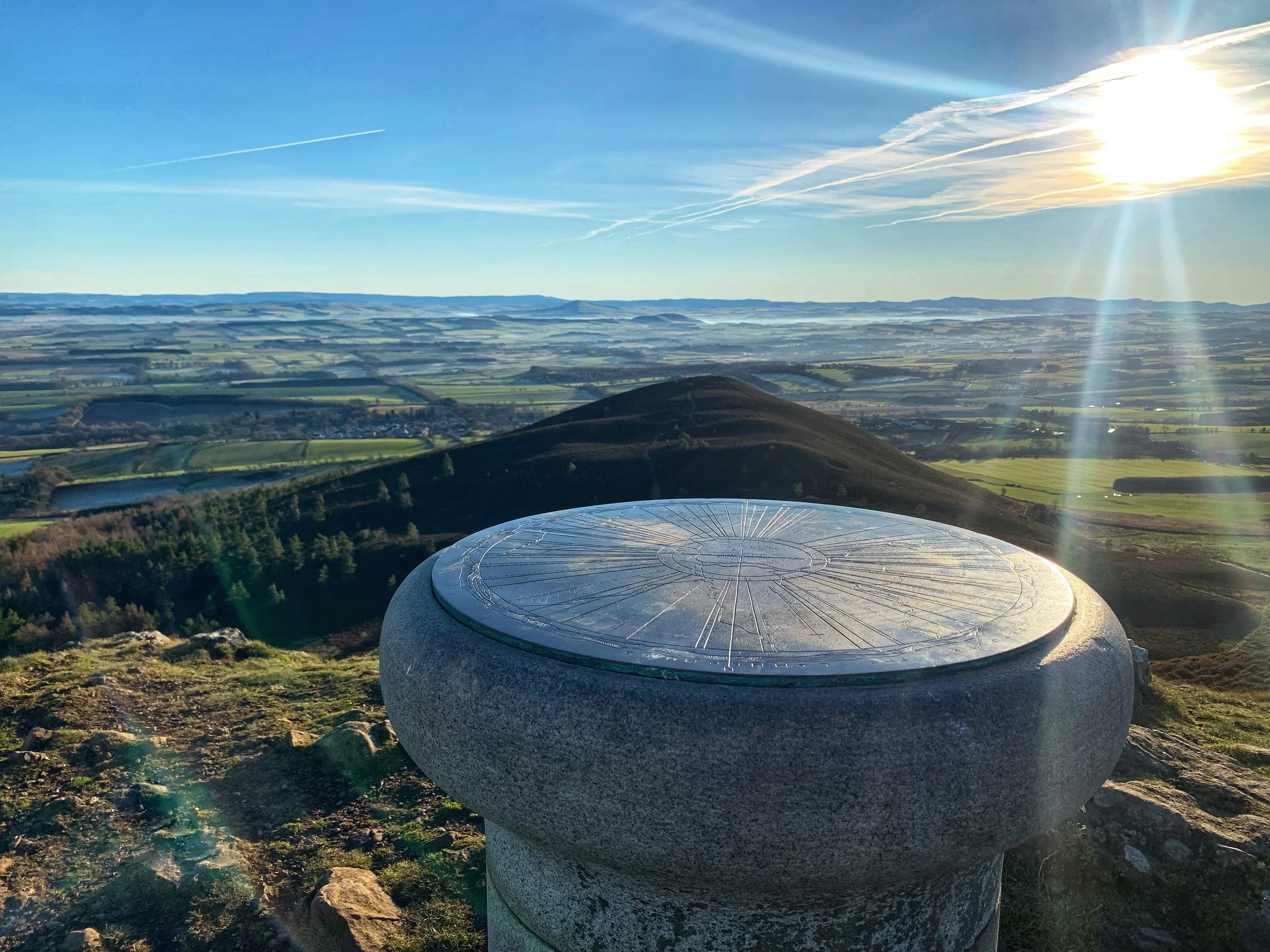
Eildon Hill View Point
Credit: @tweedvalleyblogger
Newstead and Darnick - historic villages, and short wanders…
Melrose and it’s surrounds are steeped in history and the two villages sitting West and East of the town help tell the story of the Tweed Valley, best experienced on foot. A short walk out of the town along High Cross Avenue brings you to charming Darnick, on the old pilgrims route towards Melrose Abbey. The village is in a conservation area and it’s central historic core retains real old world charm, helped hugely by main traffic bypassing the village to the South. Look out for stone work recycled from the abbey, as well as two towers, one partially ruined and the other inhabited as a private home. It was here where the young King James V took shelter while a battle between rival border families, all vying for the teenage King’s custody, raged on nearby skirmish hill. You can visit the battlefield and loop back to Melrose using the riverside path, passing the old weir where the monks of the abbey diverted the River Tweed to supply their needs. This walk takes about 2 hours and is perfect way to get to know both the history and landscape of the River Tweed.
To go even further, I would recommend a walk to Newstead where the stonemasons who built the great Abbey of Melrose first settled. In 2025 I helped create a Heritage Trail in the village which shares some of the fascinating story with those looking to delve deeper into the areas past. A short walk on the Priorswalk from Melrose Abbey (the medieval stonemasons commute) will take you to Newstead. You can download the legacy trail map here.
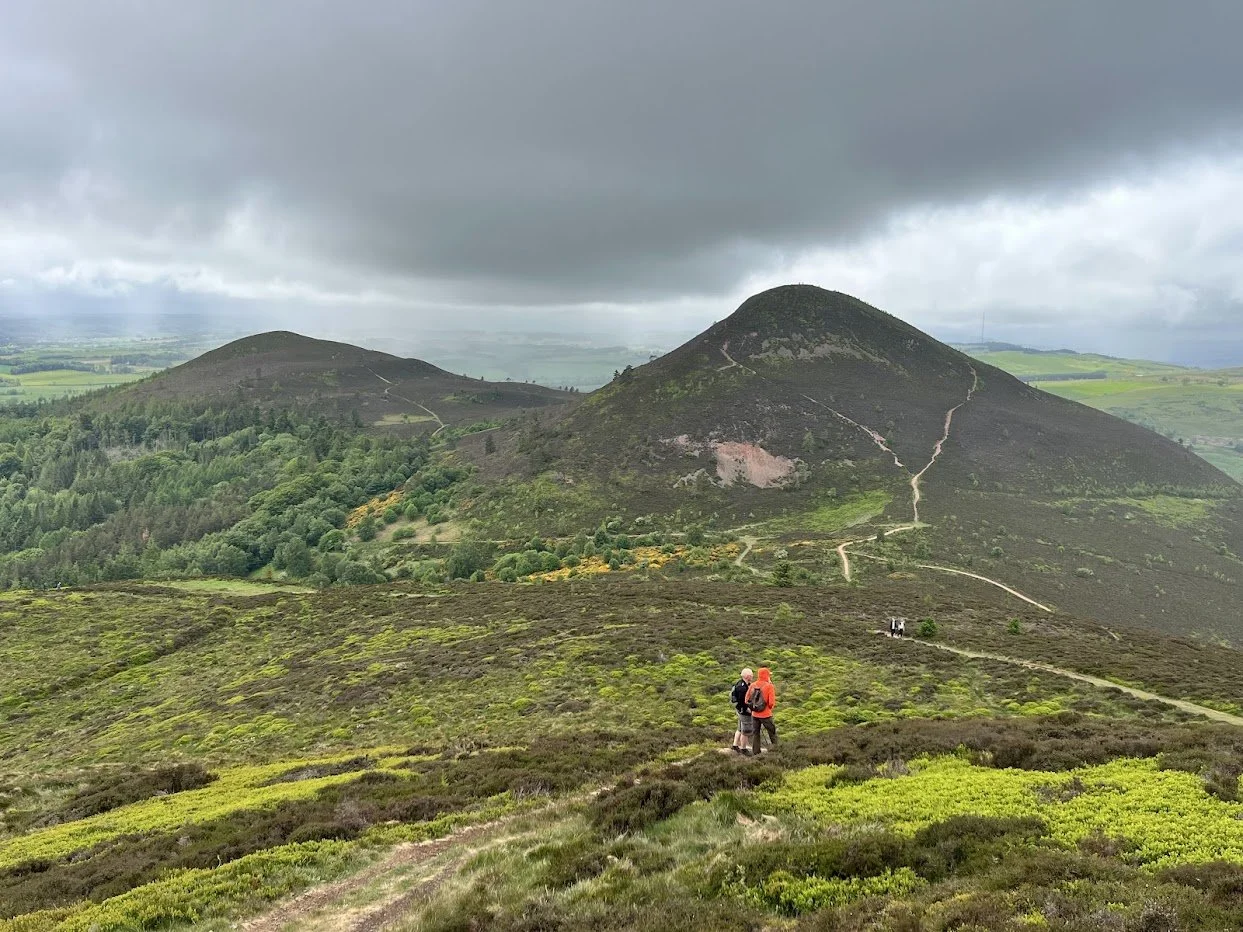
Eildon Hill and St. Cuthbert’s Way
Credit: @tweedvalleyblogger
The Eildon Hills - a half-day delight of a hike
Eildon Hill or simply ‘The Eildons’ is surely one of the finest half day hikes in the country. It’s a steep pull up from the town centre but you will be rewarded by the most magnificent, far reaching views in the Borders. As ever Walk Highlands have a super route for you to follow which will also allow you to take in Newstead and the enigmatic Rhymers Stone…
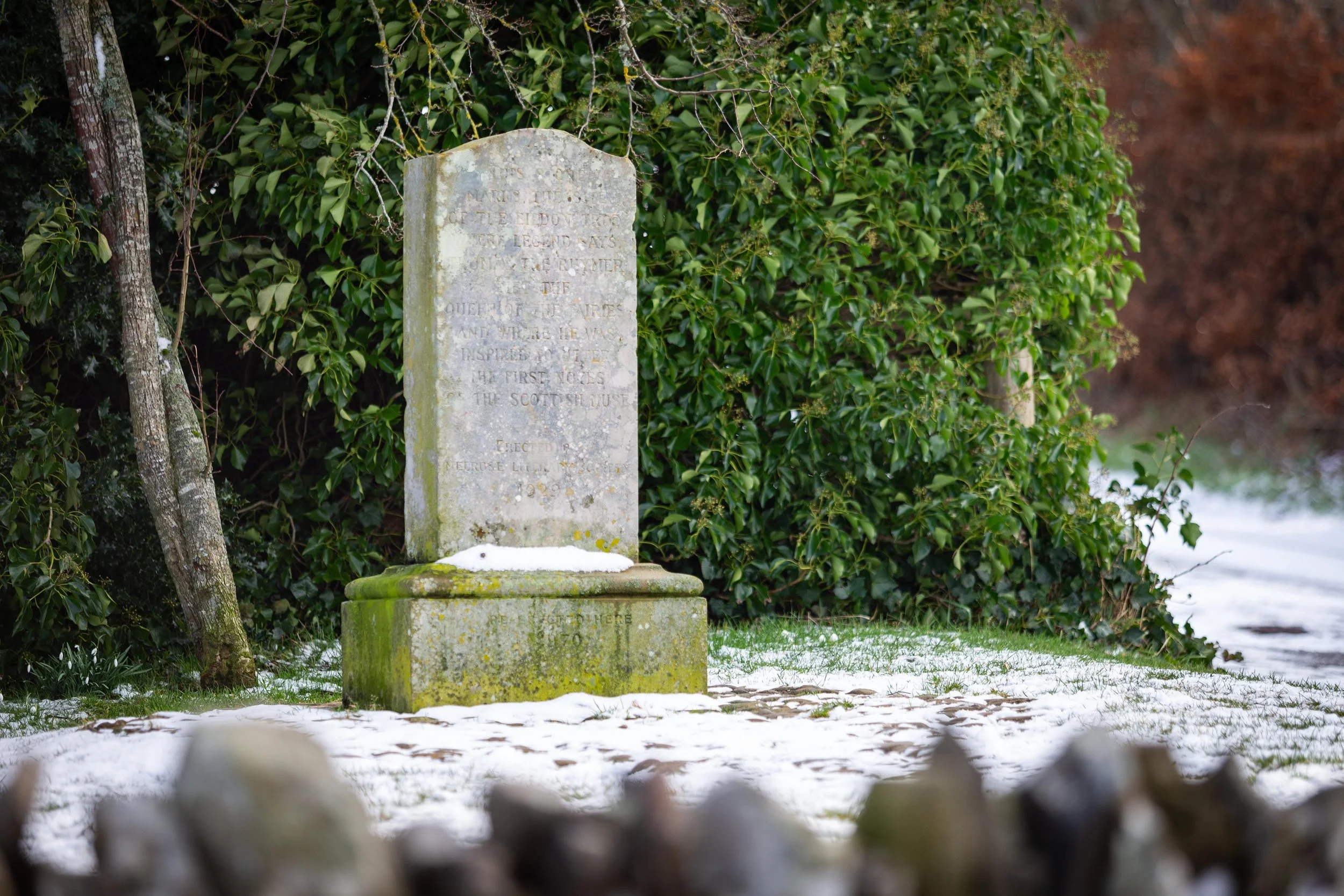
Rhymers Stone
Credit: SSDA/Jason Baxter
Get a guide - Tweed Valley Blogger & Trimontium Walks
If you want to take your walking experience further in Melrose, then why not seek a guided walk? I offer guided walks of Melrose and the surrounding area as part of my Low Carbon offering where you can be met from the train at Tweedbank and guided by the Borders number one tour guide. For those looking to dive into the fascinating Roman heritage of the area, then join one of the excellent guided walks from Trimontium Trust, which leave from the museum in town and head out to the fort site beyond Newstead. These walks are truly a treasure trove.
Take a load off - pubs, campsite, cafes, shops and museums
No self respecting walking town would be complete without the facilities to support walkers and their aching feet. Melrose has all of this, including a town centre camp site, a number of hotels, restaurants, coffee shops, museums, visitor attractions, gift shops, food shops and more. You can find out more about what the town has to offer all year round on my dedicated Landing Page for Melrose.
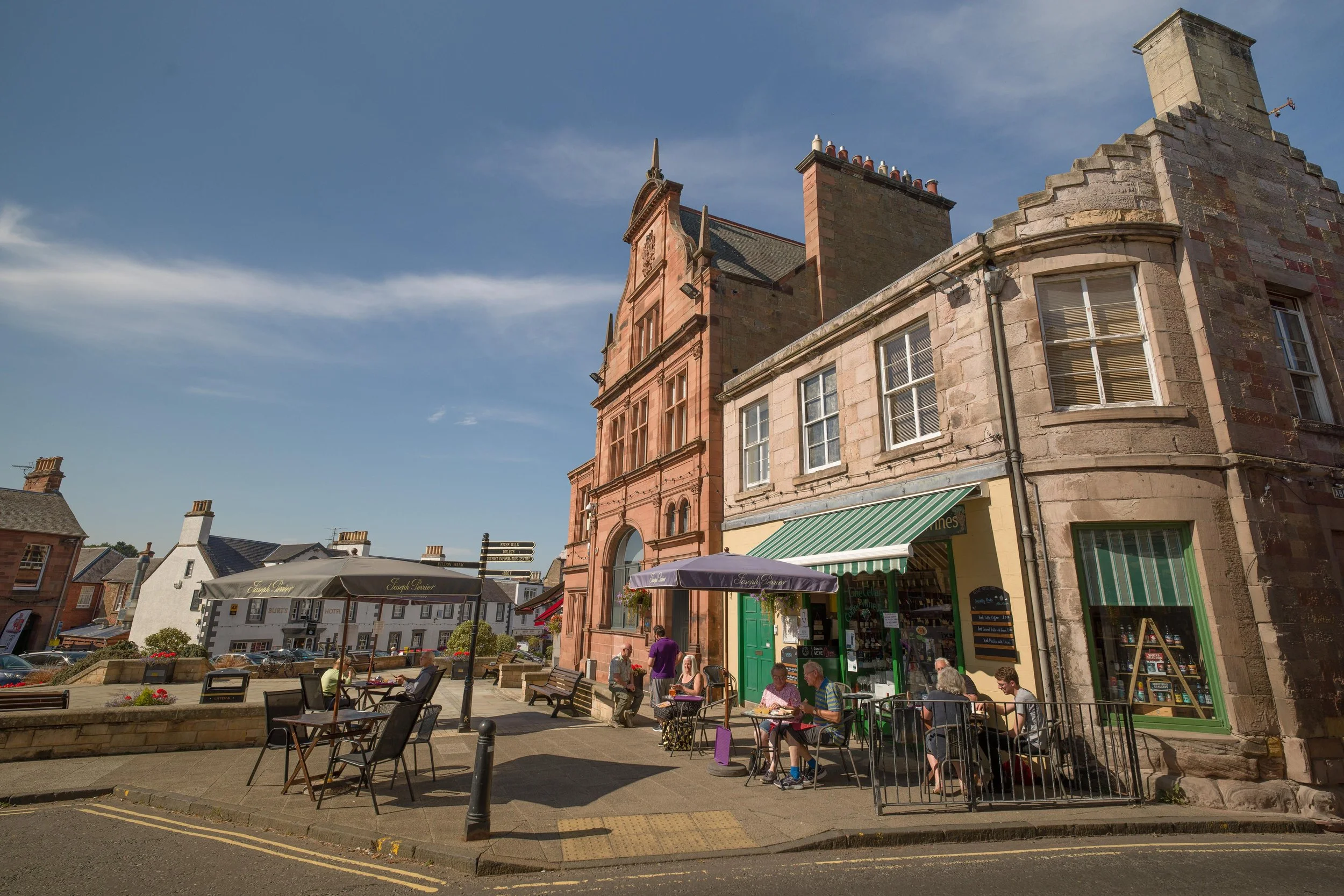
Melrose Town Centre
Credit: SSDA
Keep up to date with Tweed Valley Blogger on Instagram