Ten Books That Made Me
This year is the National Year of Reading, with the brilliant theme of Go All In.
Why do we need a national year of reading? Because only one in three young people aged 8–18 now read for pleasure, and adult reading rates are falling too. I think this is a crisis with potentially very damaging long term impacts. In an age of mis- and dis-information, the ability to read, think critically and encounter authoritative voices is more vital than ever.

Go All In - The National Year of Reading 2026
This campaign has inspired me to share my own love of reading on my blog, podcast and social media this month.
The Go All In campaign isn’t about finger wagging or insisting everyone drops everything and tackles Proust or Joyce. It’s about encouraging people to read what they already love, whether that’s sport, true crime, music, comic books, stamp collecting, nature, fantasy or anything else that sparks joy. What a wonderful, positive take for the campaign.
So why am I posting about this, what’s it go to do with me and why do I feel the need to share it here? Because reading underpins everything I do professionally, and it has enriched my whole life. Reading in fact is life. I will be the first to admit I do not have a massive, influencer style reach but if this blog and others like it I will be making across February 2025 encourages one person to take that dusty book off the shelf, pop into a bookshop or even visit a library, it will have been worth it!
Across my blog, podcast and socials this month, I’ll be sharing what reading means to me in the hope it raises awareness of the campaign and encourages you, and those you love, to Go All In. Here then are the ten books that made who I am today. It’s an honest selection, I haven’t went all high brow as I think it’s important to be open about your influences, and also to share joy of reading about things you love - the theme of Go All In…
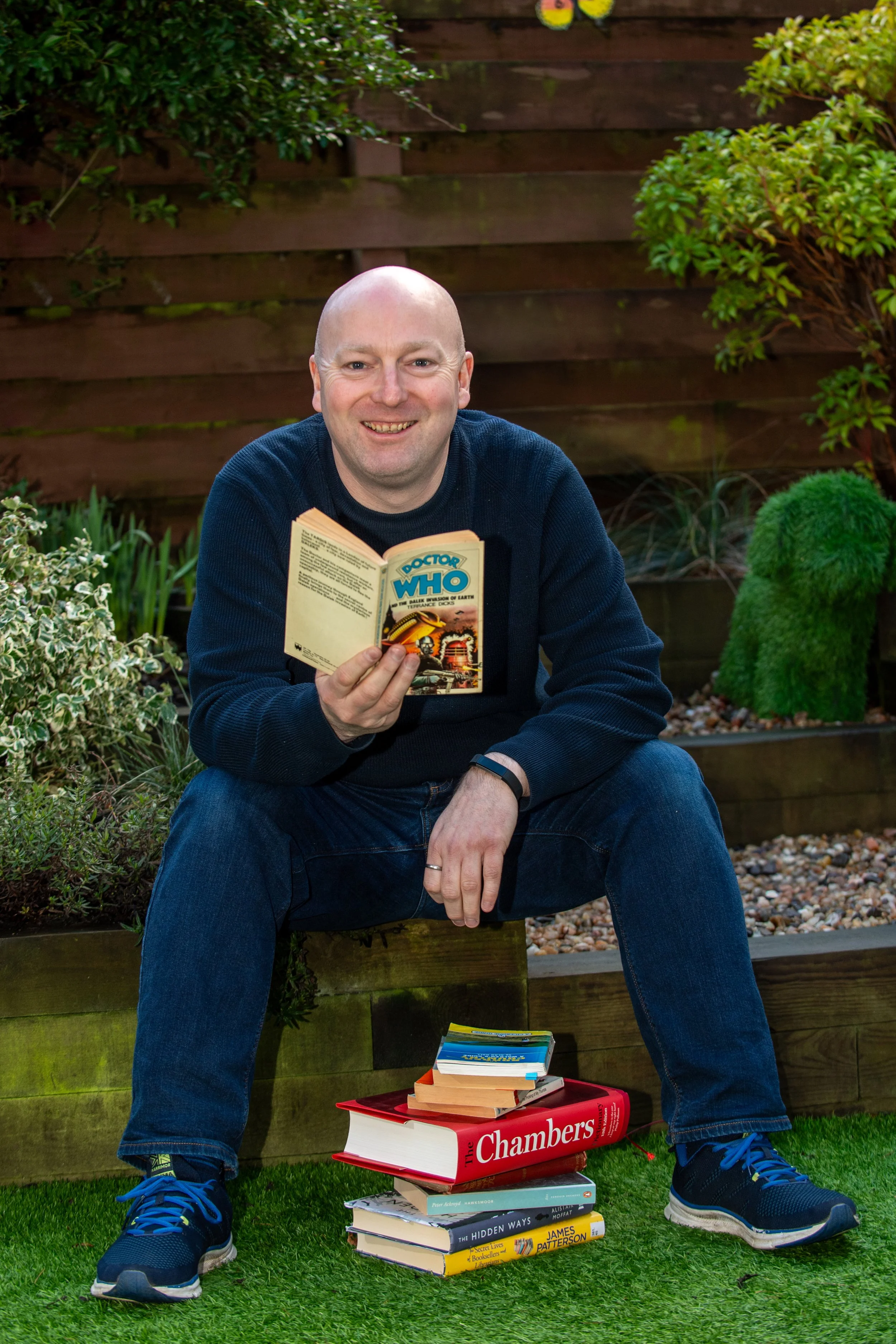
The Dalek Invasion of Earth - Terrance Dicks
My love of reading started early and, like many slightly odd British boys, it began with telly’s Doctor Who. My Doctor Who growing up was Sylvester McCoy, and the first series I remember wasn’t exactly vintage (Ken Dodd on an intergalactic bus, Sheila Hancock and a killer poodle), however the mix of scares and that peculiarly British camp got its hooks into me.
Very quickly I realised that if I wanted to enjoy Doctor Who’s stories all year round, I needed the books - the Target novelisations. They were easy to read and painted pictures of alien worlds the BBC’s modest budget could never hope to match. I devoured them, often spending an hour or two tucked into a corner of Waterstone’s or WH Smiths while Mum and Granny browsed at British Home Stores.
The undisputed master was Terrance Dicks (1935–2019), who wrote 67 of these novelisations. His style was punchy, economical, and perfect for young readers. This novel begins with the line: “Through the ruin of a city, stalked the ruin of a man.” Hooked!
I wasn’t alone in this. A whole generation of writers such as Mark Gatiss, Robert Webb, Frank Skinner, Frank Cottrell-Boyce, Steven Moffat, Russell T Davies, Jenny Colgan, Paul Cornell and many more cite his influence. While he never inspired me to try and become a professional writer, I’m sure my modest steps into storytelling through my blog owe Terrance a debt of gratitude.
I even met him once, at a book signing in the now-defunct Waterstone’s on Princes Street, Edinburgh. We go there early and I was first in the queue – in fact there was no queue such was my keenness! The book he signed for me that day, nearly 35 years ago, remains one of my most prized possessions.
By the Pricking of my Thumbs by Agatha Christie and The Adventures of Sherlock Holmes by Arthur Conan-Doyle
Since I was a teenager I’ve been a huge fan of the mystery novels of Agatha Christie and the Sherlock Holmes stories of Arthur Conan Doyle. Decades on, I still return to them often, in that warm mixture of comfort and nostalgia which re-reading old books can bring.
Memories of these are inevitably tied to watching classic ITV adaptations on the telly. But the truth is that, despite the excellence of David Suchet, Jeremy Brett and others, the real magic lies in the writing.
Sometimes these writers are dismissed as “cosy” and not that challenging. Perhaps not , but does reading always have to be an intellectual challenge? I think not. And “cosy” is misleading - neither author relied on gore or excessive violence, yet both could make the flesh creep in eerie and discomforting ways.
That’s why I chose these two books in particular. I recall reading By the Pricking of My Thumbs in my teens, and the phrase “Was it your poor child?” delivered by an old lady in a nursing home still creeps me out. Perhaps not vintage Christie, but her ability to conjure chilling moments never left her. And in this collection of Sherlock Holmes stories we have The Engineer’s Thumb and The Speckled Band - both of which gave younger me the shudders.
So don’t dismiss these as cosy, lightweight, or not worth your time. They have never been out of print, and with good reason.
And for me as a blogger and storyteller, I think they’ve left a lasting mark. Christie and Conan Doyle taught me how atmosphere, place and a turn of phrase can work together to unsettle and (more importantly for my tours!) delight. So thank you both, and here’s to more years of revisiting the best.
Knots and Crosses by Ian Rankin
Ian Rankin’s Knots and Crosses (1987) marked the beginning of the John Rebus series. It’s not the strongest of the Rebus novels, I think even Sir Ian would say that the brilliance came later, but there’s something raw and particular about these early books (and their covers) that still grips me.
When I think of Rebus, I think of my own early days working in Edinburgh. I left school in 1999, aged 17, and began commuting north from the Borders. Though Edinburgh was the city of my birth, I’ve always been a Borders man at heart. So for a while those daily commuting journeys carried a thrill, and through the first ten or so Rebus novels I found myself discovering the city’s hidden corners, the cobbled closes, the smoky pubs (yep, that was still a thing) and its darker underbelly.
Rebus himself was a knotty companion. He is frustrating, stubborn, sometimes unlikeable but Rankin always makes him compelling. In those years when I was carving out a career that never quite fulfilled me, and in a place where I never really fitted, I found a strange sense of belonging in his sort of shadow Edinburgh.
As time has passed, I’ve definitely drifted away from the series. Rebus has aged, and so have I. Perhaps it is time to return, if only briefly. As Rebus himself once said in a brilliant bit of Rankin’s prose “The past is good to visit, but it doesn’t pay to linger…”
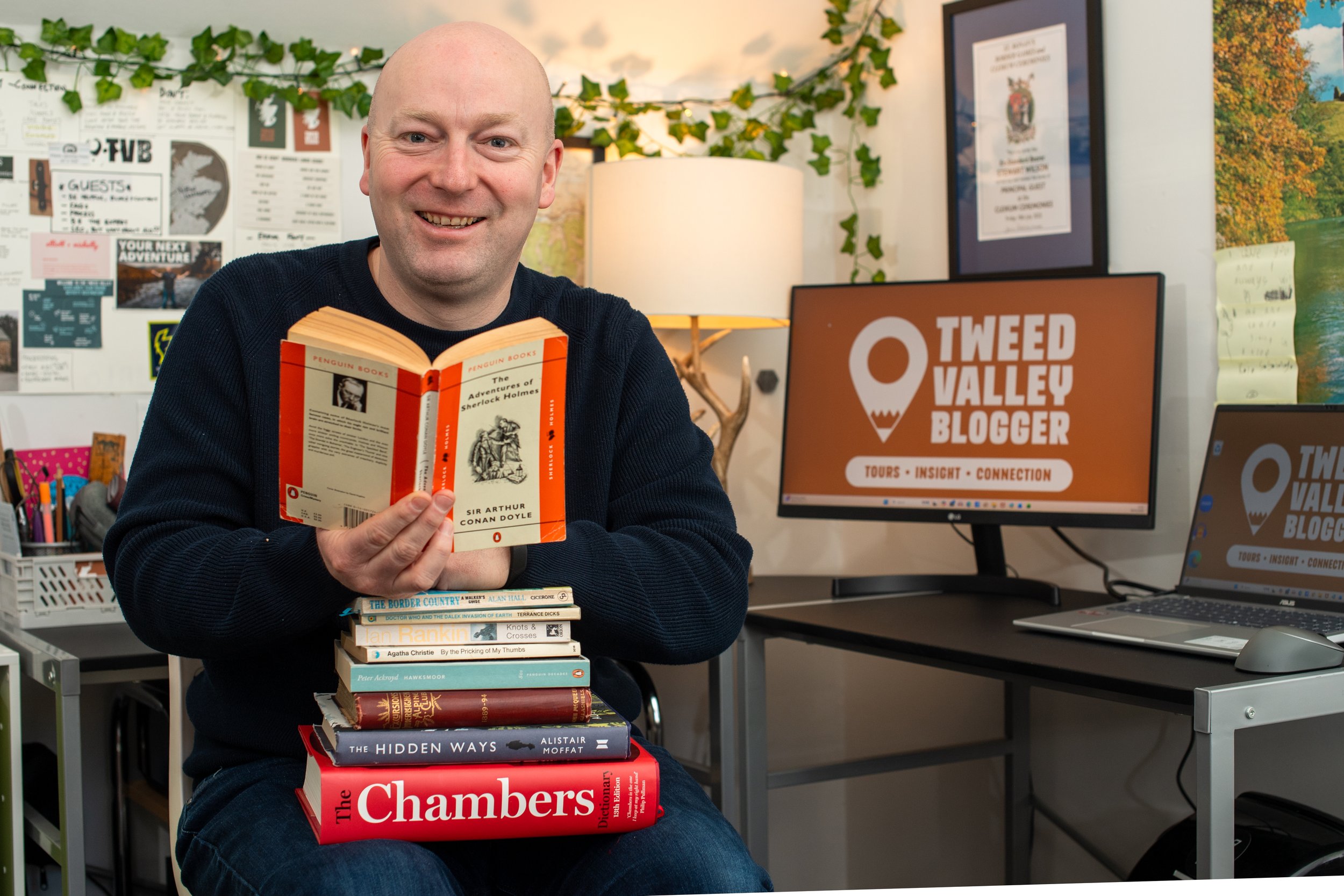
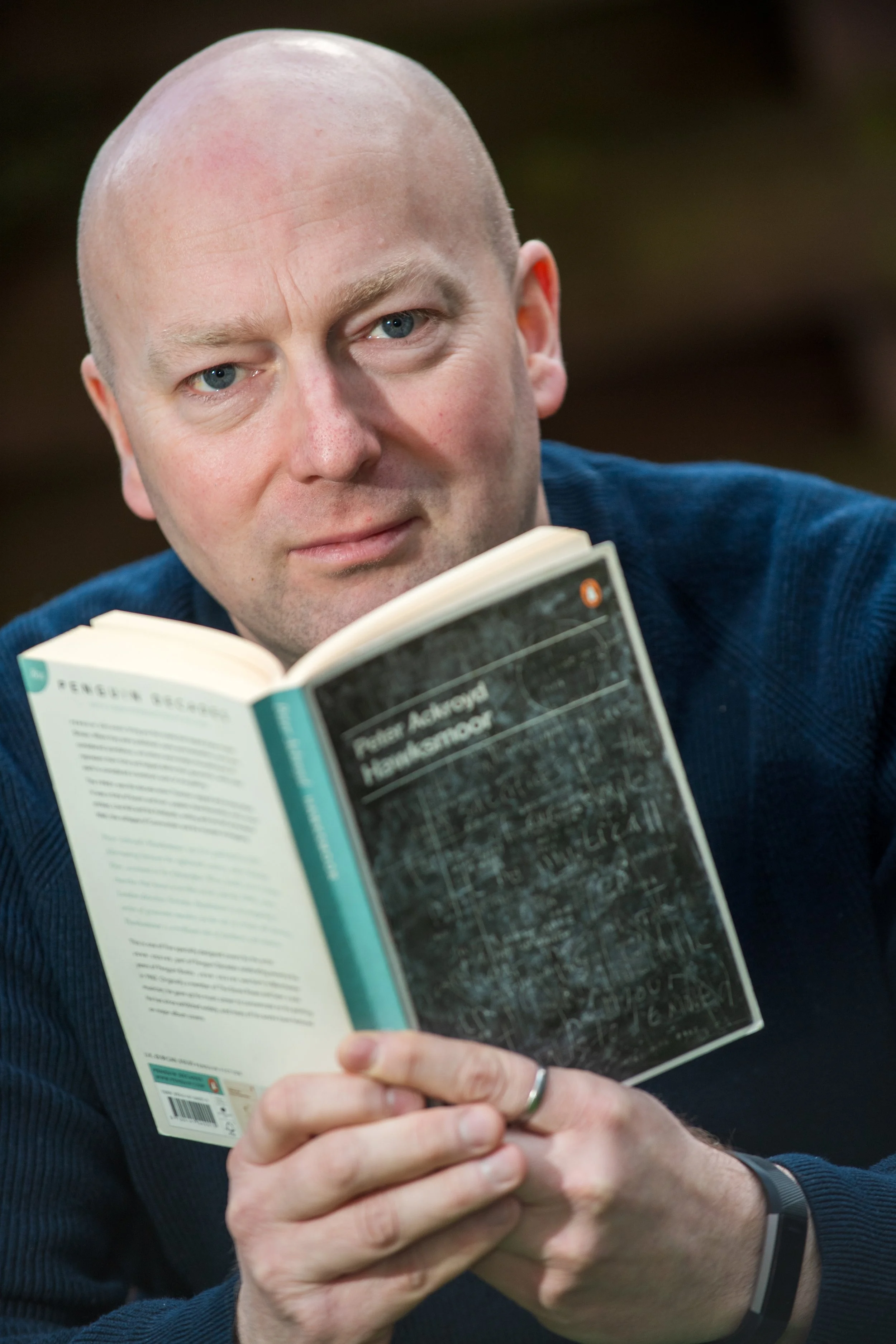
Hawksmoor by Peter Ackroyd
I first heard about this book in the early 2000s, after being utterly absorbed by Alan Moore’s From Hell (which also nearly made the cut). Moore’s graphic novel plunged into London’s labyrinth of occult theories, Masonic conspiracies and architectural enigmas in a city where every street seems to carry centuries of hidden meaning. If you have seen the Johnny Depp film then you’ve only really seen a fraction of that story. Anyway, that encounter left me hungry to explore the shadowy terrain of ‘psychogeography’ more deeply, and Peter Ackroyd’s Hawksmoor (a huge influence on From Hell) became my next step into that world. There are lots of definitions of psychogeography but I see it as exploring how places shape our emotions and thoughts as we move through them.
Published in 1985, the novel weaves together two timelines: in the (then) present day, Detective Nicholas Hawksmoor investigates a series of mysterious deaths and in the 18th century, architect Nicholas Dyer designs and constructs seven churches across London. Dyer is based on the historical Nicholas Hawksmoor, whose real buildings still stand as strange, brooding monuments in the city. Ackroyd is a great writer and he blurs the boundaries of time, so that past and present sort of bleed into one another, creating a narrative that is really disorienting and unsettling.
To be honest, I can’t claim to have fully grasped every concept Ackroyd was reaching for! His blend of history, mysticism and what I suppose could be called postmodern or meta doesn’t really offer tidy interpretation. However I think that’s what gives the book enduring power and appeal to me. It isn’t a puzzle to be solved like a Christie, Conan Doyle or Rankin but more an atmosphere to inhabit.
For me, Hawksmoor was a favourite novel but I also got to use it as a kind of manual. When work very occasionally took me to London in the early 2010s, I found myself wandering the city in search of Hawksmoor’s churches, conducting my own ‘psychogeographic’ drifts through The City, East and West ends while colleagues went to the pub. Those 3 or 4 very long walks gave me a sense of communion with London’s hidden histories, which completely fascinate me and I am keen to revisit, 15 or so years on. No regrets at all at not going to the pub!
The Principal Excursion of the Innerleithen Alpine Club
I’ve known about the Innerleithen Alpine Club for as long as I can remember, and the name alone was enough to intrigue me. What, exactly, is “alpine” about Innerleithen?? I’ve written and podcasted about the group and its redoubtable first president, Robert Mathison. Formed in the Victorian era, the club set out to explore the hills and valleys of the Borders, bringing together experts in botany, geology, natural history architecture and more. They were educating themselves, but also revelling in the joy of discovery – the reports in this book are a delight.
Why does this book make my list of ten that shaped me? Because of what it represents to me. Beneath the flowery Victorian prose lies a simple, enduring idea - your local patch matters. It is worthy of study, of love and of sharing. That ethos has been a constant inspiration to me, teaching me to cherish the hills, and it absolutely gave me the impetus to start a Tweed Valley blog, eventually nudging me toward a new career.
For years I knew of the book but didn’t own a copy. As an out of print volume, it was always a bit expensive. I remember spotting one in the local second-hand shop for £75 and debating for months whether to take the plunge. I can pinpoint the exact day I finally did - 19 May 2012. Any Hibernian fan will know the pain of that date, just as hearts fans will remember it with joy! A very poor Hibs were thrashed 5–1 by Edinburgh rivals in the Scottish Cup Final. As Ryan McGowan slotted in the fourth goal, I switched off in disgust, marched to the bookshop and handed over the £75. It was money well spent, lifting me away from the petty worries of the football. So who knows, if Pat Fenlon’s Hibs hadn’t been so totally abject that day, the course of my life might have turned out very differently. Thanks Pat, and thanks Innerleithen Alpine Club!
The Hidden Ways by Alistair Moffat
Alistair Moffat is a prolific writer, born and raised in the Borders, and many of his books have found a permanent home on my shelves. I’m glad to have met him and even worked with him briefly last year, and I have huge respect for the depth of his explorations into the past of not only of the Borders, but of Scotland and far beyond. He’s also been a key figure in local culture, from helping to establish the Borders Book Festival to crafting the narrative for the Great Tapestry of Scotland in Galashiels.
As an author and storyteller, his work has only grown stronger, and I think that’s because he increasingly allows his own experiences and life to shape his writing. This book, published in 2017, traces Scotland’s forgotten roads - not from a desk, but by walking them, climbing fences, falling into ditches and narrowly avoiding traffic. Alongside the gripping history of these lost or half forgotten routes, you get the mishaps, humour and humanity of the journey. That personal thread has deepened further in later books such as To the Island of Tides (2019), written in the shadow of personal grief, and The Secret History of Here (2021), a diary which takes place around his own home in Selkirk.
As I’ve tentatively developed my own writing and storytelling, his commitment to getting out there, or to going all in, has been a real inspiration. Alistair remains prolific with a cracking looking book about the North Sea recently released and with at least one new book a year being published, he shows no sign of slowing down. Long may that continue.
The Innerleithen Alpine Club
All of these fabulous images were taken by Gareth Easton Photography. Thanks Gareth!
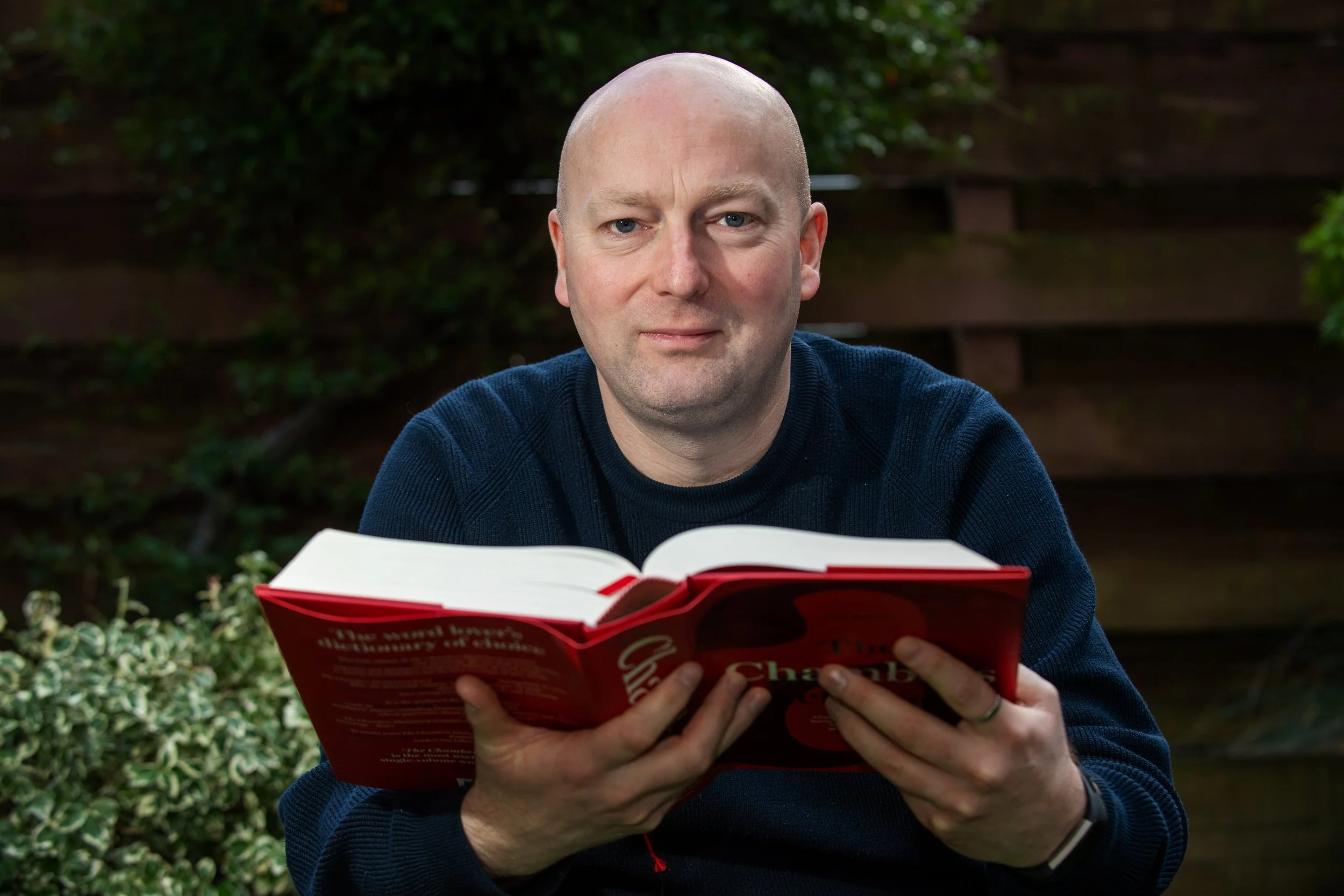
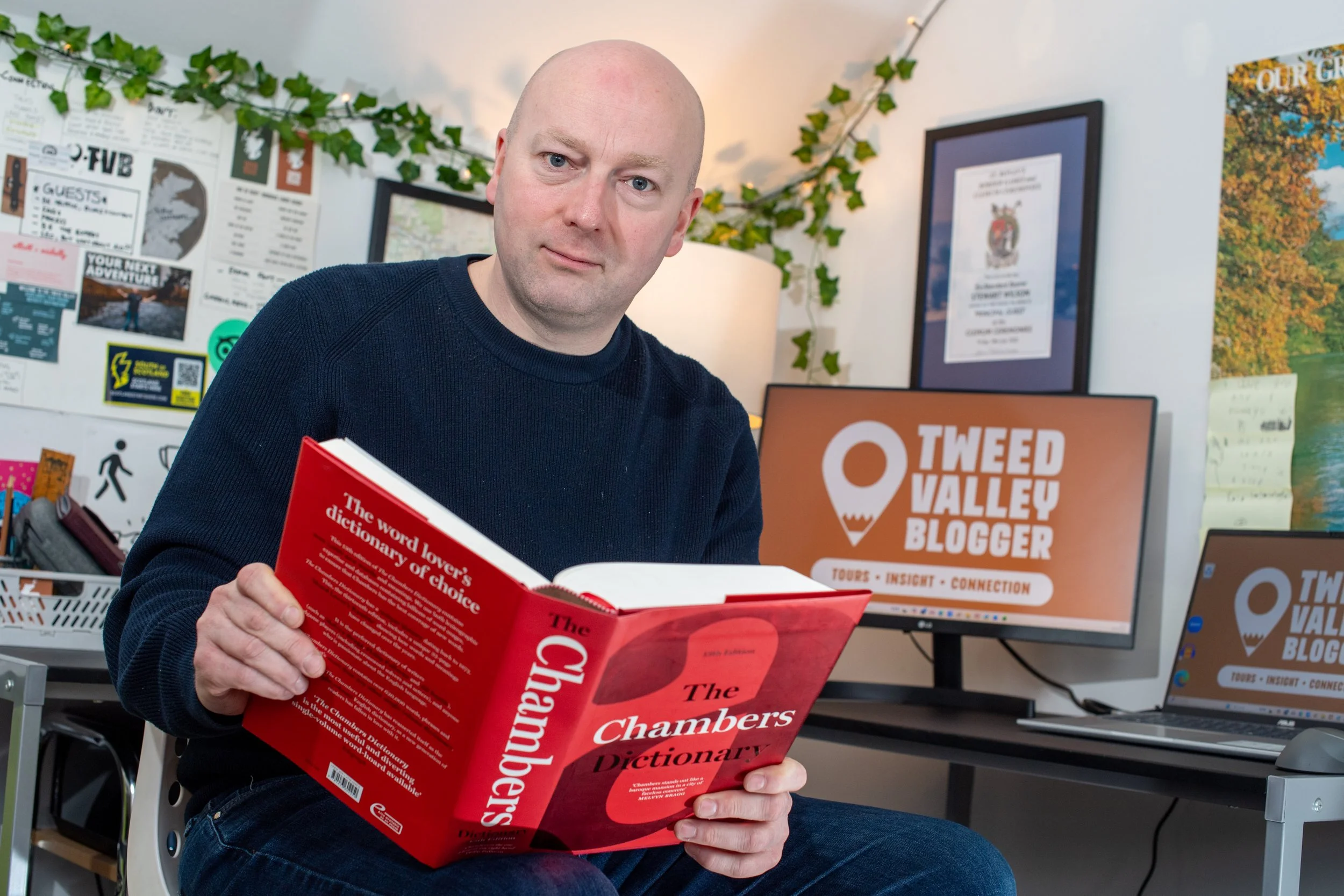
Chambers Dictionary
A dictionary? It sounds like a joke entry in my list, and a pretentious one at that, coming from someone who promised this would all be honest. But there it is. A Chambers has been within arm’s reach for about 15 years, and I’m not ashamed of it!
I found my first one by chance during a lunch hour wander to the brilliant annual Christian Aid second hand book sale on George Street in Edinburgh. My mind was no doubt still buzzing with some pressing issue, long forgotten, when I spotted a blazing red brick of a book covered in obscure and intriguing words. It cost the very attractive sum of £1, so I took it back to the office, imagining it might improve my vocabulary. I’d just been promoted to management and clearly thought I needed to step up my intellectual clout a bit as I stood on the eve of my 30s.
Instead, it sat on my desk for years, occasionally helping with report writing but mostly acting as a prop to make me look like a serious grown up manager rather than the self doubting bloke I actually was. It followed me to my next job in 2014, and by then I’d started dipping into it properly. Chambers is packed with personality and revels in language – it started to be an occasional lunch time read as I devoured my Boots meal deal.
I loved it so much that in 2015 I splashed out £40 on the big 13th edition, which still sits beside my desk at home today. (I left the earlier version in a cupboard when I left my job in 2023. I do hope someone has found it and loves it...) Alongside 1,800 pages of definitions, it’s full of delightful oddities such as the story of English, the Beaufort scale, pronunciation guides, champagne bottle sizes and the eccentric World Lover’s Ramble. And of course, there’s the local connection as it was founded by the Chambers brothers of Peebles back in the 19th century.
What makes it feel even more precious now is how rare books like this are becoming. Even in 2011 it felt a bit old fashioned to use one, but fifteen years on and in an age of instant search results and AI shortcuts a dictionary that invites you to learn slowly or for the sheer joy of it feels out of time. No matter, I adore this book, which is unashamedly, gloriously about knowledge. It revels in it, invites you to wander and rewards you every single time with something new. Long after I’m gone, I hope it’s still being opened by my kids rather than recycled - though being buried with it is always an option…
The Name of the Rose by Umberto Eco (Audiobook)
In the early 2010s I got my first proper smartphone, and it changed my life. Fifteen years on, I still lean toward calling that change a good one, though the jury may still be out. Almost overnight, my reading habit collapsed. Books gave way to endless scrolling, the barbed hooks of social media pulling me into hours of sharing, swiping and poking (remember that!!)
What saved me, by the skin of my teeth, was audiobooks. Yes, I count them as reading, and so does the Go All In campaign. In the hands of a skilled narrator, audiobooks are a rich, immersive way to experience literature, often opening doors to texts that might feel too daunting on the page.
Exhibit a is Umberto Eco’s The Name of the Rose. It’s famously dense with pages and pages describing the carvings on a single wooden door, paragraphs in obscure Latin, whole essays on semiotics and medieval comedy just dropped into the book. On paper, it can feel impenetrable and certainly did to me. But in audiobook form, with SeanBarrett’s narration, it becomes a living, breathing story. His performance is just astonishing. He gives every voice in the multicultural monastery its own distinct character from William of Baskerville with what I judge to be a County Durham lilt, to the innocent Adso and to the gravelly tones of the ancient Jorge. Suddenly, with someone there beside you Eco’s labyrinthine text is not just manageable, but gripping with a whodunnit murder mystery hidden inside a maze of ideas.
I could have chosen other examples Roy McMillan’s narrations are always superb, especially The Old Ways by Robert McFarlane, but this one proved to me that audiobooks are a serious artform. I would say that audiobooks are what saved my reading habit, keeping it on a sort of life support as I battled (and still do) the addictive pull of the devices unleashed on us in the early part of the 21st century.
The Border Hills by Alan Hall (Cicerone Press)
This is pretty much the definitive guide to exploring the Border Hills. First published by Cicerone Press in 1993, it’s been my inspiration and guide on many hill walks over decades and is now very well thumbed indeed. I picked it up second hand for £2.50 and that investment has been repaid many times over. The main content is 53 walks across the Borders, with all the information required to plan a walk but what makes it so special to me is Alan Hall’s witty and sometimes quite cutting asides. Sitka Spruce plantations are categorised as ‘barely acceptable’, the character of the area is described as ‘its own man’ in Scotland and there are ample descriptions of bogs and peat hags. The book has been re-printed and updated since the original 1993 version I have, but little on the hills has changed – it still does the job for me decades on. I love the glossary of Border hill terms at the back, and the now virtually all defunct list of useful phone numbers at the back. This antique charm, and the ability to visualise the many routes in the book are what probably makes this my ‘desert island’ book, if forced to ever chose. An absolute gem.