“Nothing is now done directly, or by hand; all is by rule and calculated contrivance. For the simplest operation, some cunning abbreviating process is in readiness”
Following my recent trip to Gretna Green, I took the opportunity of being in the area to leave the M74 and join the old, Thomas Telford coaching road which makes its way through Ecclefechan. I suspect for many that wonderfully named Dumfriesshire village is best known for the delightful fruity and buttery tarts which it has leant its name to, or simply for being the distinctly Scottish name that confirms that you have indeed entered another country while roaring up the motorway, a few miles after doing the big cheer that all Scots are obliged, by custom if not (yet) law to let out on crossing the border.
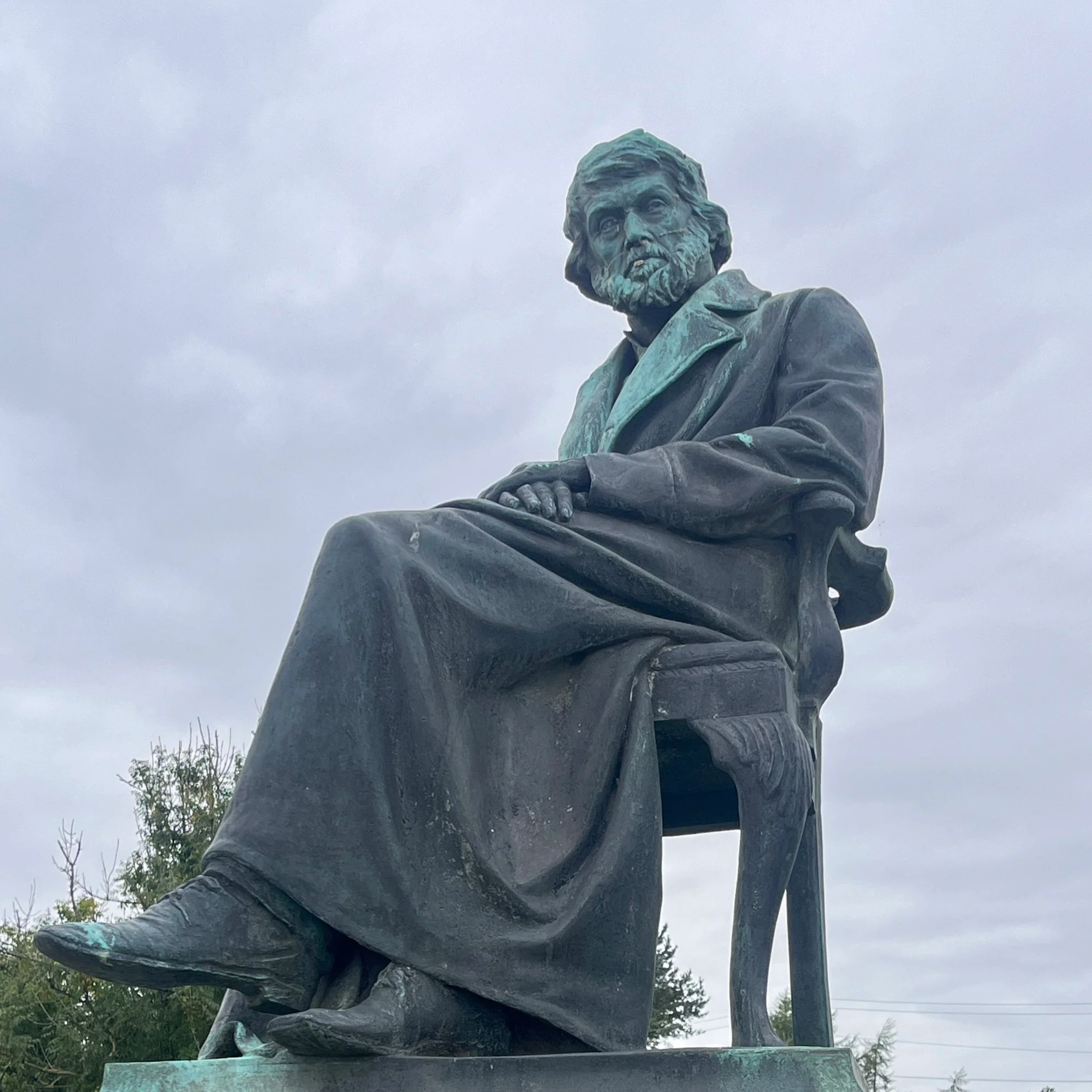
The villages most famous son is undoubtedly Thomas Carlyle (1795 - 1881), a 19th century essayist, philosopher and cultural thinker who greatly inspired so many in the Victorian age. He was a champion of moral purpose and the importance of spiritual depth on societal cohesion (despite his own faith being a bit obscure). He saw his time as increasingly materialistic and mechanised and wrote some wonderfully thoughtful articles and papers on the ideas of his age. Like many Victorians, his legacy and reputation has wavered over time, but from what little I have read of him I think there is no doubt that he was incredibly prophetic. Take the quote at the top of this blog for instance, Carlyle was talking of the increasingly mechanisation of the industrial revolution and how it was leading to a decline in traditional crafts. Could it not equally still be said of the rise of the smartphone, of the endless drive for convenience in all aspects of our lives and indeed the age of AI. Humanity has not changed in it’s inventiveness or willingness to cast aside our older modes of exertion. But at what cost? If the brain is a muscle and must, like our lungs and legs, be exercised are the ‘cunning abbreviating processes’ of the 21st century aiding our own downfall?
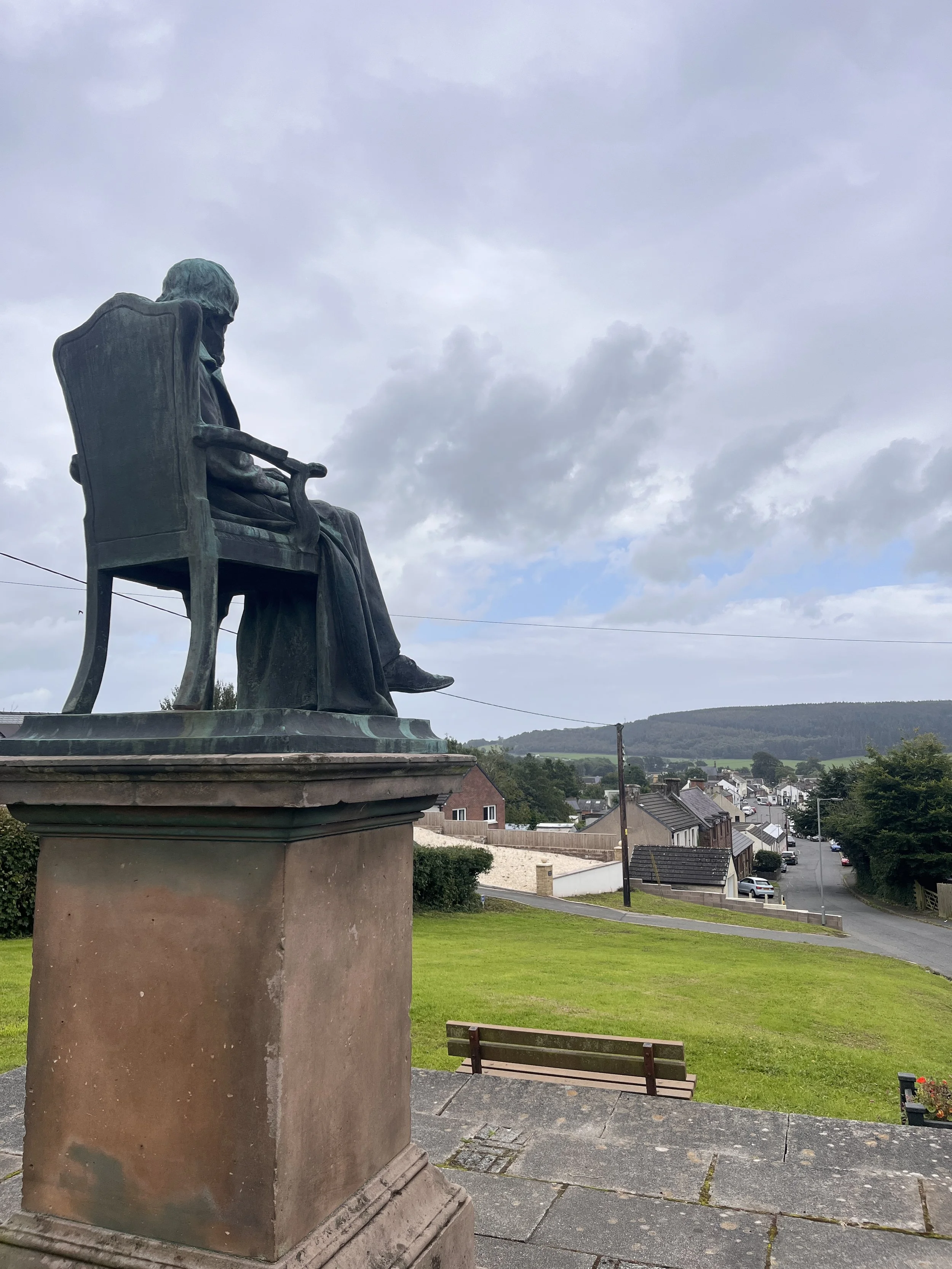
Statue of Carlyle, looking down the steep High Street of Ecclefechan
“We remove mountains, and make seas our smooth highway; nothing can resist us. We war with rude nature and, by our restless engines, come off always victorious and loaded with spoils”
In the same essay, Carlyle takes a swipe at mans dominion over nature. Like that other great Dumfriesshire figure Robert Burns he challenges us to question what the end results of our mastery of the resources and nature of the planet will be. Why do we see ourselves as above nature when everything in our soul is natural, and not the mechanical presented to us by our own machinations.
Carlyle saw the industrial revolution fundamentally change the Scotland, and Britain, he knew. The agricultural life of the countryside changed, and of course it was not wholly negative - he himself notes in the essay that men were better ‘fed, clothed and in all outward respects accommodated.’ But he saw the warning signs of industrial capitalisation back in 1829:
“...wealth has more and more increased, and at the same time gathered itself more and more into masses, strangely altering the old relations, and increasing the distance between rich and poor...”
Change the language a bit and it’s the same charge being levelled at the tech bros, venture capitalists and growth obsessed industrialists of today. Technology has changed, and is now on a trajectory of growth that would dizzy even a razor sharp brain like Carlyle’s, but much of humanity really hasn’t.
So what can we do about this - are we just doomed to repeat ourselves, watching resources dwindle and life grow harder? Carlyle certainly saw the dangers, but his legacy suggests hope. From his writing came the social conscience and comic vitality of Dickens, the flamboyant wit of Oscar Wilde, who even bought Carlyle’s writing desk and the Arts and Crafts vision of Ruskin and Morris, both of whom acknowledged their debt to his work.
We may not have a Carlyle today to galvanise a similar resistance to the pressures of our, 21st century mechanical age, but perhaps we do not need one - he’s already there, with a statue looking over Ecclefechan. Read Carlyle and be reminded to make something with your own hands, to honour the dignity of labour and the value of spirit over convenience. Don’t be afraid to make mistakes and be human in your undertakings. Write to old friends, contribute to your community, draw, dance and enjoy the richness of life, refusing to become one with the machine.
The day after my visit to Ecclefechan I was watching the Last Night of the Proms, an annual ritual. The great Finnish conductor Sakari Oramo stood up to deliver his address at the end of the concert and talked about how his orchestra was ‘authentically imperfect - his sort of AI’. This struck me as something Carlyle would approve of, a celebration of sincerity, effort and human fallibility over mechanical perfection.
If these quotes intrigue you, then I suggest you take some time to read the full essay which you can do free and online here.